
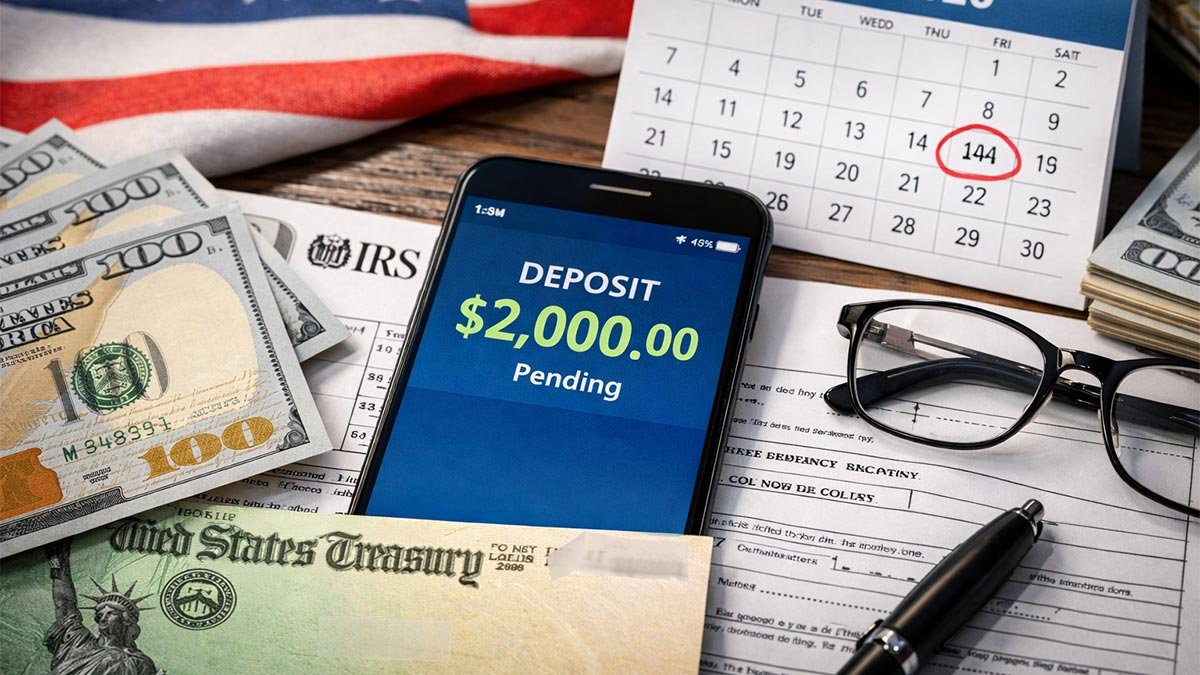
A timely financial boost for millions of Americans
In April 2026, millions of households across the United States are set to receive a one-time $2,000 direct deposit confirmed by the Internal Revenue Service. This financial support is designed to help individuals and families cope with the continued pressure of rising living costs, including housing, groceries, and everyday expenses.
With inflation still affecting household budgets in 2026, this relief initiative focuses primarily on low- and middle-income earners. The payment is based on the most recent tax data available, allowing for faster processing and distribution without requiring most recipients to take additional steps.
What the $2,000 relief payment actually is
Unlike tax refunds or government loans, this $2,000 payment is a standalone financial assistance measure. It does not need to be repaid and is issued directly by the federal government.
The IRS uses information from 2025 and 2026 tax returns to determine eligibility and payment amounts. This ensures that funds reach those who need them most, while also speeding up delivery.
The goal of this program is straightforward: to provide immediate financial relief to households dealing with increased costs of essential goods and services.
Who qualifies for the payment in 2026
Eligibility is determined based on income, tax filing status, and residency requirements.
Single individuals earning up to $75,000 annually are eligible for the full payment. Married couples filing jointly can receive the full amount if their combined income does not exceed $150,000. Those with incomes above these thresholds may receive reduced payments or may not qualify at all.
Applicants must also have a valid Social Security number and must have lived in the United States for at least six months during 2026.
Households with dependents may receive additional financial support, depending on the number of qualifying individuals listed on their tax return.
IRS payment schedule and key dates
To efficiently manage distribution, the IRS is issuing payments in multiple phases throughout April 2026.
The first wave of direct deposits began between April 6 and April 12, primarily targeting individuals who filed early and already had direct deposit set up. A second round of payments is scheduled between April 16 and April 20 for additional eligible recipients.
- → I Had to Return to Work After Retiring: 3 Financial Lessons Every Retiree Should Know in 2026
- → The Worst Age to Claim Social Security if You Want to Maximize Lifetime Income
- → Form 1040 for U.S. Expats: A Complete 2026 Guide to Filing, Requirements, and Paying Zero Tax
- → U.S. Person for Tax Purposes: A Complete Guide for American Expats in 2026
- → 10 Smart Financial Benefits Seniors Born Between 1941–1969 Can Use in 2026
- → 7 Reasons Social Security Payments Can Stop in 2026 — Even If You Qualify
- → SSI and Social Security Payments in April 2026: Full Schedule, Tax Rules, and Key Updates
For those who do not have direct deposit information on file, paper checks are being mailed starting April 27. These typically take longer to arrive due to postal processing times.
While these dates are structured for efficiency, the exact timing may vary depending on individual banks and processing systems.
How to receive your $2,000 payment without delays
Most eligible taxpayers do not need to take any action, as payments are automatically issued based on existing IRS records. However, there are a few important steps that can help avoid delays.
If your banking details have changed since your last tax filing, it is essential to update your information through the IRS online portal. Incorrect or outdated details can result in failed transfers or delayed payments.
Individuals who do not typically file taxes, particularly those with lower incomes, may need to register through the IRS non-filer tool. This ensures that their information is captured and that they receive their payment.
Tracking tools such as the IRS online account and refund status systems can also help monitor the progress of your payment.
Why direct deposit is the fastest and safest option
Choosing direct deposit significantly reduces waiting time compared to receiving a paper check. Funds are transferred directly into your bank account, often within a few days, eliminating the risk of mail delays or lost checks.
This method also provides greater security and allows recipients to access their money immediately for essential expenses or savings.
Many financial experts recommend linking a savings account to make the most of the funds, especially in a high-interest environment where even short-term savings can generate additional returns.
Conclusion
The IRS $2,000 direct deposit initiative in April 2026 represents a critical financial support measure for millions of Americans navigating ongoing economic challenges. By understanding eligibility requirements, payment timelines, and the importance of keeping personal information up to date, recipients can ensure they receive their funds without unnecessary delays. This program not only provides immediate relief but also highlights the government’s continued efforts to support households during periods of financial pressure.
FAQs
Who is eligible for the $2,000 payment in April 2026
Individuals and couples within the specified income thresholds who meet residency and tax filing requirements qualify for the full payment
When will the payments be issued
Direct deposits began in early April 2026 and are being distributed in multiple phases throughout the month
Do I need to apply to receive the payment
Most eligible individuals will receive it automatically, but non-filers may need to register
What should I do if I changed my bank account
You should update your details through the IRS online system to prevent delays
Can higher-income earners receive the payment
Partial payments may apply in some cases, but full eligibility is limited to those within the income thresholds